
FINE ARTS & CERAMICS
Building a creative practice through material, process, and technical skill.
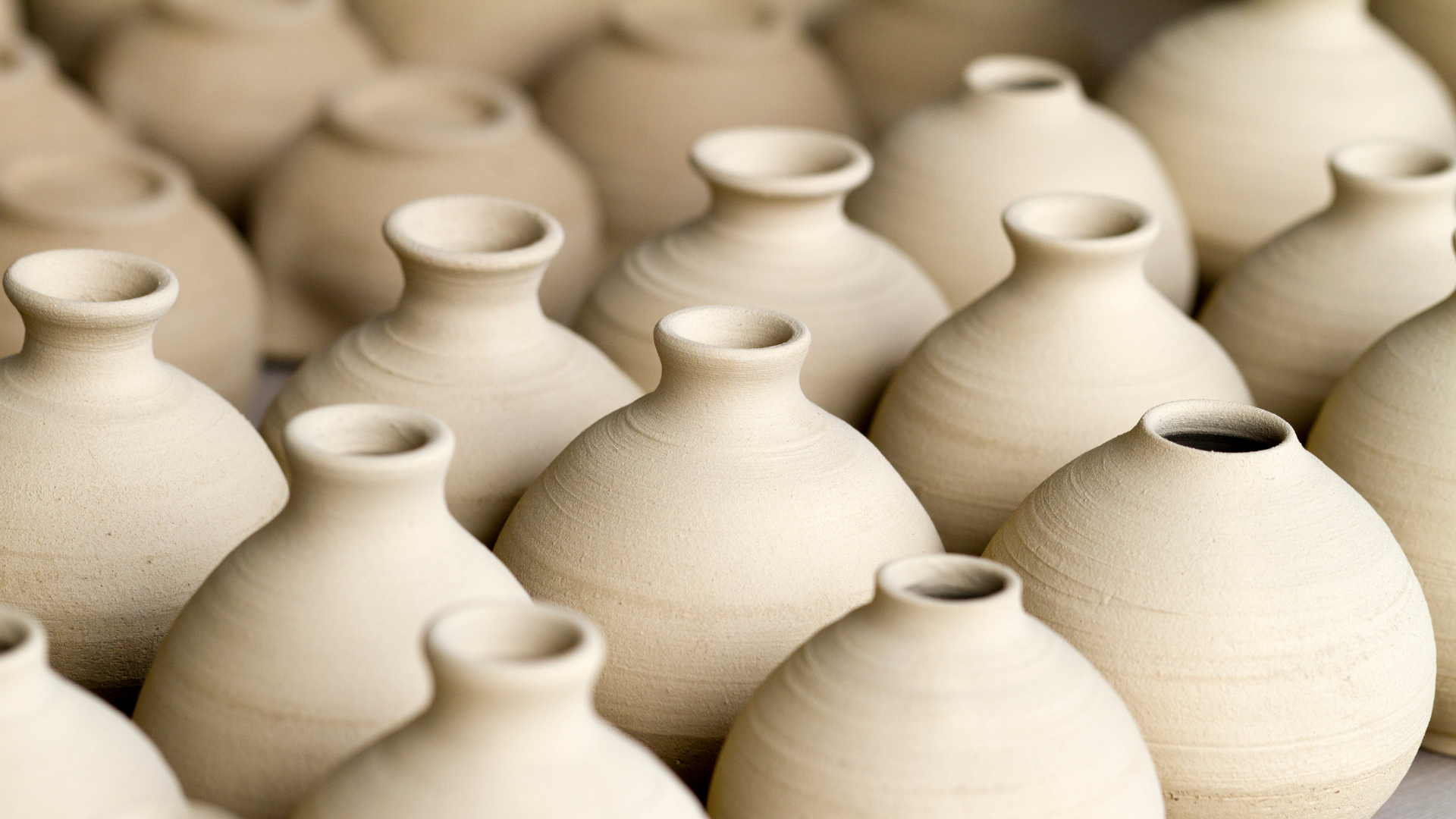
Ceramics has been one of the longest-running and most technically influential parts of my creative practice. I began working with clay in high school and developed a deeper connection to the medium through ceramic and sculpture courses in college, where I built a foundation in wheel throwing, glaze chemistry, kiln operation, firing techniques, and studio practice.
My concentration in ceramics as part of my BFA gave me the opportunity to study the medium not simply as a craft, but as a combination of material science, technical process, design, and artistic expression.
Working with clay has taught me to think differently about the relationship between planning and experimentation. Unlike digital design, ceramics requires a physical understanding of material behavior. Clay responds to moisture, pressure, temperature, time, and gravity, and many decisions made early in the process can affect the final result.
That experience has developed skills that extend well beyond the ceramic studio: patience, precision, problem-solving, consistency, adaptability, and an appreciation for process.
It has also strengthened my understanding of three-dimensional form, proportion, surface, texture, and color—skills that continue to influence my work as a designer.
TECHNICAL SKILLS
Wheel throwing | Hand-building | Kiln operation | Glaze mixing and formulation | Glaze testing | Bisque and glaze firing | Raku firing | Clay reclamation | Studio maintenance | Material preparation | Ceramic surface development | Functional ware | Sculpture and experimental forms
RAKU
Raku has been one of the most influential firing processes in my ceramic education. The process requires pieces to be heated rapidly to extremely high temperatures before being removed from the kiln while still glowing and placed into combustible material.
The resulting reduction atmosphere dramatically affects the glaze surface, often producing metallic finishes, crackling, variation, and other effects that cannot be completely predicted.
Raku taught me to understand the relationship between chemistry, atmosphere, heat, and material while also becoming comfortable with the unpredictability inherent in the process.
FUNCTIONAL CERAMICS
Much of my ceramic practice has focused on functional forms, particularly bowls, plates, and dinnerware.
Creating complete sets for family and friends gave me an opportunity to focus on consistency and repetition. A single successful piece is very different from creating six or eight pieces that need to feel like they belong together.
PLATES
Plates have been some of the most technically challenging forms I've worked with. Maintaining an even surface and thickness while keeping the piece level is critical, particularly as the clay dries.
I have created four complete sets of plates and dinnerware, each one reinforcing the importance of consistency, drying control, and patience.
BOWLS
Bowls were some of the foundational forms I learned on the wheel. They taught me how to center clay, establish an even base, open the form, and pull the walls consistently.
There is a physical rhythm to wheel throwing that I have always enjoyed. It feels almost like drawing with your hands and fingers in mid-air—using pressure and movement to shape something that did not exist before.
SUSTAINABILITY & STUDIO ETHICS
My ceramic education also introduced me to the environmental and practical responsibilities involved in working with clay.
I developed an understanding of clay reclamation, responsible material use, waste reduction, chemical handling, and proper studio safety. Working as a studio technician reinforced these lessons by placing me in a position where maintaining a safe and functional studio directly affected other artists and students.

Working in marketing has expanded the way I think about design. Fine art taught me how to think visually; professional design has taught me how to apply that thinking with a specific audience, objective, deadline, and business need in mind.
I have also learned how important it is to make complex information approachable. Much of my work involves technical, engineering, or defense-related subject matter that may be unfamiliar to the intended audience. My role is often to identify the most important information, establish visual hierarchy, and create a design that communicates the idea without overwhelming the viewer.
That process has strengthened my ability to balance creativity with clarity, which has become one of the most valuable parts of my professional practice.