
FIBER & TEXTILES
Developing precision, patience, and problem-solving through textile work.
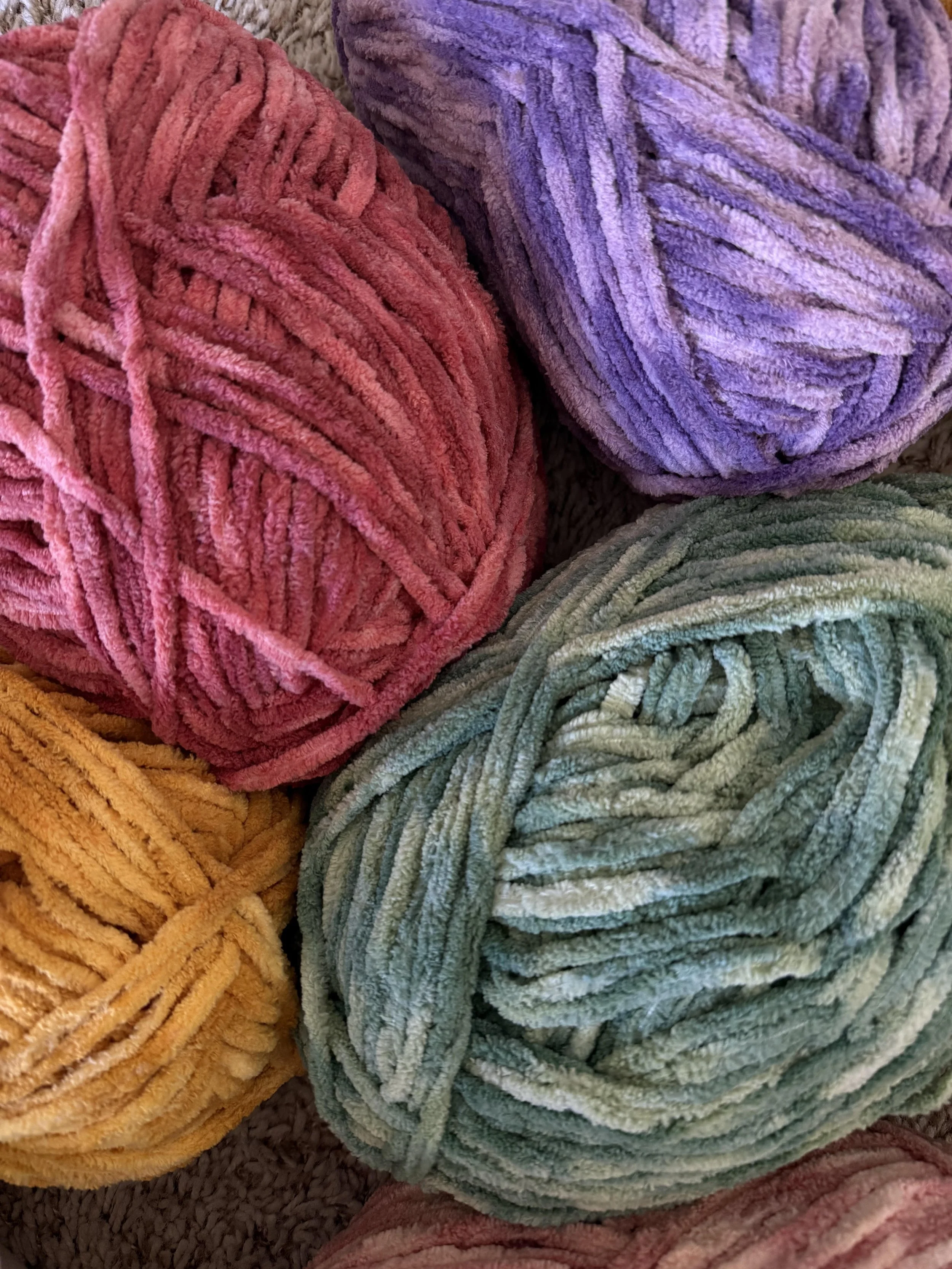
Fiber and textile work has become an increasingly important part of my personal creative practice. Crochet began as a hobby but has developed into a skill that I have intentionally expanded through increasingly complex patterns, techniques, and projects.
Although it exists outside of my professional design work, fiber art represents many of the same qualities that have shaped my broader creative practice: patience, precision, repetition, pattern recognition, problem-solving, and an appreciation for craftsmanship.
Including fiber and textile work in my Experience section provides a more complete picture of how I create outside of a professional environment. Not every creative skill comes from formal education or employment. Some of the most valuable skills develop through independent practice; choosing a difficult project, learning a new technique, making mistakes, and continuing until the process becomes familiar.
Crochet has given me a space to do exactly that.
AREAS OF EXPERIENCE
DEVELOPING THE CRAFT
My approach to crochet has been intentionally focused on skill development. Rather than staying with simple projects, I have challenged myself with increasingly complex patterns and techniques.
That progression has required me to learn how to:
Read and interpret complex patterns
Identify and correct mistakes
Maintain consistent tension
Understand stitch structure
Work with intricate repetition
Follow detailed instructions
Adapt techniques when necessary
Plan larger projects
Manage long-term projects from beginning to completion
TEXTILE CONSTRUCTION
In addition to crochet, I have experience with basic sewing and textile construction. Working with fabric provides another perspective on material, construction, proportion, and physical form.
These skills continue to expand my understanding of how different materials behave and how objects can be constructed from individual components.
PATTERN & STRUCTURE
One of the aspects of fiber work that I find particularly interesting is the relationship between individual components and the larger form.
A single stitch may seem insignificant on its own, but thousands of carefully repeated stitches can create an intricate and intentional structure.
That way of thinking connects closely to my design practice. I naturally look for relationships between individual elements, patterns, repetition, rhythm, and the larger composition.

Fiber work has reinforced something that carries across nearly every part of my creative practice: good work often comes from repetition.
The finished object is only one part of the process. There is also the planning, learning, troubleshooting, refining, and persistence that happens along the way.
That process-oriented mindset is something I carry into both my professional design work and my other studio practices.